Next Service Day: Saturday, 3 October 2026 VIEW TIMETABLE
Next Service Day: Saturday, 3 October 2026 VIEW TIMETABLE

In 1845 the South Eastern Railway arrives in the famous Spa town of Royal Tunbridge Wells. The first station was a temporary terminus opened on 20 September 1845 situated north of Wells Tunnel. This closed when the line was extended to the present station, which opened on 25 November 1846. It became a through station in 1851 when the line opened to Robertsbridge, and a year later opened through to Hastings. The London, Brighton and South Coast Railway from Grove Junction to Tunbridge Wells West opened in 1867 for goods and 1876 for passengers. Immediately after becoming part of the Southern Railway in 1923, the station was named Tunbridge Wells Central.

The East Grinstead, Groombridge and Tunbridge Wells Railway Act was passed on 7th August 1862 which was to extend the already built line from East Grinstead across the forest to the Spa town. This was to be built by the London, Brighton and South Coast Railway. The extension to Tunbridge Wells was opened on 1st October 1866 giving the town two stations, neither of which were linked together by railway until the following year.

On 1st February 1876, a short spur through Grove Tunnel (183 yards, named after the hill above and on a sharp curve) was opened between Tunbridge Wells West and Tunbridge Wells Central. This connected with the South Eastern Railway south of their own station at Grove Junction. The lines at Groombridge split with one going to Three Bridges via Ashurst Junction and East Grinstead, and the other branching off to Eridge, Lewes and Eastbourne via Birchden Junction. It was only in the late 1800s that the line between Ashurst Junction and Birchden Junction was brought into passenger use; prior to that, all services had to go via Groombridge, and what is now the Uckfield Line was used for locomotive storage.

A new engine shed was built, which is still standing to this day and is now our headquarters. This shed consisted of four lines at around 180ft in length and would become 75F under British Railway's shed allocation scheme. The shed originally had wooden doors and a different style roof but these have long since been replaced with more modern roller shutters and roof.

With ever rising operating costs a new rail motor service consisting of a single carriage hauled or propelled by a small tank engine was introduced in 1906. A new halt was opened at High Rocks between Groombridge and Tunbridge Wells West, served only by the rail motors. These new trains eventually halted the decline in passenger revenue with the service reaching its peak in 1914.

World War 1 had little effect on the line; train services continued to operate under the London, Brighton and South Coast Railway until 1923, when the Southern Railway was born.

The "Big Four" was a name used to describe the four largest railway companies in the United Kingdom in the period 1923–1947. The Railway Magazine coined the name in its February 1923 issue: "The Big Four of the New Railway Era". The Big Four were: Great Western Railway (GWR), London, Midland and Scottish Railway (LMS), London and North Eastern Railway (LNER) and the Southern Railway (SR). The companies were formed under the Railways Act 1921, in a process known as "The Grouping" (of the railways), which came into effect on 1 January 1923. On 1 January 1948, the companies were nationalised to form British Railways under the Transport Act 1947.

World War 2 brought a reduction in services with the withdrawal of the rail motors. A government oil store was established at Rowfant, bringing an increase in freight traffic. After the war, some passenger services were reinstated. Still, by 1950, both passenger and freight services were in decline, and BR was considering the possible closure of the line between Three Bridges and Ashurst Junction in 1951, with passenger numbers at Hartfield in 1949 being only a quarter of those carried in 1923. The engine shed at Tunbridge Wells West was bombed on 20th November 1940 during the Second World War. The slate roof of the engine shed was replaced with corrugated asbestos; this was subsequently replaced with a non-asbestos roof in the 1990s when the Spa Valley Railway moved in. High Rocks Halt was temporarily closed between 16th October 1939 and 15th June 1942 as an economy measure during World War 2.

The halt at High Rocks closed on 5th May 1952. The original halt consisted of two staggered platforms on either side of the bridge over the line (High Rocks Lane), and the halt served the famous sandstone outcrop of the same name. The stumps of the original platforms are still at the side of the line.

Groombridge station was re-signalled, and a new signal box, which would last until 1969, was built. This was the most significant investment the line had seen in years, and the latest box closed three other signal boxes at Groombridge.

Tunbridge Wells West's engine shed (75F) closed to steam locomotives in June 1965. In the days of British Railways, all engine sheds across the country were given a code by which they could be readily identified in telegraphed and written communications. Principal engineering works and large depots were given a number between 1 and 89, followed by the suffix "A". The smaller sheds in the area were then allocated the same number, followed by a B, C, D and so on. Brighton was nominated 75A, and Tunbridge Wells West, being one of Brighton's sub-sheds, became 75F. Tonbridge, by contrast, was 74D, being a sub-shed of Ashford (74A). This number was displayed on a cast-iron plate on the engine's smokebox, giving railway staff an at-a-glance reference for which engine a given engine belonged. Following the closure of the shed in June 1965, the engines allocated to 75F were transferred to other depots such as Brighton. The four tracks were used to store engineers' rolling stock until the late 1970s, when they were removed. In June 1965, the Cuckoo Line between Eridge and Hailsham closed. This meant Eridge, once a busy junction station, started to see a decrease in train services as the line to Three Bridges would soon close too.

On 1 January 1948, the companies were nationalised to form British Railways under the Transport Act 1947, and Tunbridge Wells West became 75F under the BR shed allocation scheme. Locomotives soon gained new liveries and logos, but some lines in the area began to close. The East Grinstead - Lewes line closed in May 1955, but the Three Bridges line survived with a new timetable being introduced in June 1955. There was a marked improvement in passenger numbers, especially between Three Bridges and East Grinstead. Despite a proposal to introduce diesel-electric trains in 1962, the line was threatened by the Beeching Axe, when the Three Bridges to Tunbridge Wells line was among many proposed for closure in March 1963.

Despite strong local objections and a new timetable, Barbara Castle confirmed the closure of the line between Three Bridges and Groombridge from 1st January 1967. Although originally proposed for closure, the section between Groombridge and Tunbridge Wells West (West was added to the name in 1923) remained open. In 1969, the 'new' Groombridge Signal Box closed, and the spur to Ashurst Junction also closed and was removed. The line

The track between Ashurst Junction and Three Bridge was lifted, taking three years, and the line between Lewes and Uckfield was also closed on 4th May 1969, making Uckfield the end of the route from London (which it still is today). This effectively meant the line to/from Tunbridge Wells West had nowhere significant left to serve. What was once a busy station with links to Three Bridges, East Grinstead, Eastbourne, Polegate, Brighton and London via Oxted was now a grand station lost without many destinations. Road traffic was on the rise, and with few locations available for the line to serve, passenger numbers continued to decline.

The route into Tunbridge Wells West remained open; there was no investment in the line, and by the early 1980s, the track and signalling needed replacing. With the planned removal of Grove Junction during the upgrade of the Tonbridge - Hastings line, British Rail decided they could no longer justify keeping the line open and announced its closure from 16th May 1983. Once again, there were strong objections, but British Rail's cost argument outweighed these. They estimated that to upgrade the infrastructure, while retaining the existing services, would give a £175,000 loss per year, and the Secretary of State confirmed closure of the line on 6th July 1985.

Originally, the line between Tonbridge, Tunbridge Wells West, and Wadhurst was planned to be closed the entire weekend of July 6th and 7th, 1985, for engineering works in connection with the electrification of the Tonbridge-Hastings line. When the closure date was announced, there was strong support from the BR Commercial Department as well as enthusiasts to cancel the engineering works to permit the line between Tunbridge Wells Central (TWC) and Tunbridge Wells West (TWW) to remain open for the last day on July 6th, noting that on Sundays, there was no booked service between Tunbridge Wells Central and Eridge. The Management agreed to cancel the planned engineering works between TW Central, Grove Junction, and TWW until approximately 22:30 on Saturday, 6th July 1985. The lines between Tonbridge, TWC and Grove Junction to Wadhurst remained closed for engineering works. It is reported by those on the train that as soon as the final train from TWC to TWW went over the junction, the Permanent Way team were there ready to remove the track, which by the morning of Sunday, 7th July 1985, was gone!

On Saturday, 6th July 1985, an all-day shuttle service operated between TWC and Eridge on a booked timetable with two Class 207 DEMUs – 1311 and 1317, the latter is now preserved at the Spa Valley Railway. The booked times of the last train over the Grove Junction to Eridge were as follows: TWC departed 22:20, TWW departed 22:24, Groombridge departed 22:29, and Eridge arrived 22:34. The penultimate train from Eridge with 1311 and 1317 (1317 leading) then operated as follows: Eridge departed 22:45, Groombridge departed 22:49, and TWW arrived 22:56. The train terminated at TWW as the line beyond this to Grove Junction closed after the passage of the 22:20 from TWC to Eridge. The last train was the 23:15 from Uckfield, formed of two Class 205 DEMUs, one of which was 1125 (now preserved at the Watercress Line). This service departed Eridge at 23:36, Groombridge at 23:40, and arrived at Tunbridge Wells West at 23:47. Whether this train ran on time, our historians are not sure! Grove Junction Signal Box, which had opened in 1932, closed on 20th April 1986 and was demolished shortly afterwards. The line through Tunbridge Wells is nowadays controlled from Tonbridge Signal Box.

Empty Coaching Stock workings continued between Tunbridge Wells West and Eridge and beyond until Saturday, 10th August 1985. Unofficially, passengers were carried, and some of our volunteers travelled on several such trains, including alighting at the then-closed Groombridge! Following the closure of Tunbridge Wells West depot on 10th August 1985, the line was officially closed... However, the Wealden Railway Company had been formed on 6th August 1985, and the Tunbridge Wells & Eridge Railway Preservation Society, which started at the same time, were ready to save the line. The Society was formally incorporated on 7th May 1987.

The North Downs Steam Railway merged with the Spa Valley Railway in 1995, bringing with it much-needed locomotives, rolling stock, track, and volunteers with a wealth of experience in running a railway. The North Downs Steam Railway was born in 1980 with the target of securing a stretch of the former Gravesend West Street branch; however, this was not to be, and the NDSR found itself moving locations until 1987, when a permanent solution came to light in Dartford, settling at Cotton Lane in the parish of Stone. Here, there was a large expanse of undeveloped land, which proved to be ideal in size for the storage and operation of the organisation’s whole stock fleet, which by this time included two steam locomotives and a range of other rolling stock. A Thames viewing point opened alongside the railway site concurrent with the Dartford Bridge in October 1991, which, along with the adjacent Stone Lodge Farm, would help encourage further custom for the trains. The railway was a ¾-mile-long horseshoe-shaped line with a run-around loop and extensive sidings. Sadly, over the years, the site was subject to vandalism, and this, coupled with the organisation’s desire for expansion and Dartford Borough Council's desire to develop the area, led to the area being relinquished by the railway in 1996. Most locomotives, stock and track headed for the then fledgling Spa Valley Railway and the NDSR merged with the organisation, adding a much-needed driving force to the rebirth of the line from Tunbridge Wells West. The legacy of the NDSR lives on with some of today’s Spa Valley Railway volunteers, and we must thank them for their dedication and commitment to the line over the years.

After the line closed, the Society formed to save the line found itself in various locations. Eridge, Groombridge and finally Tunbridge Wells West, after a long-term lease of the site was secured with J. Sainsbury PLC. The Society's volunteers cleared vegetation from the tracks along the line, repaired parts of the infrastructure, and created the site at Tunbridge Wells West. The merger with the North Downs Steam Railway helped drive the Spa Valley Railway forward and brought the line its first steam locomotives. The engine shed was modified to create an area for the public, including a shop, ticket office and toilets.

The first public services operated on 21st December 1996 when the railway reopened between Tunbridge Wells West and Cold Bath Bridge, a distance of ¾ mile. The trains were operated with RSH. 7846 'North Downs' on a special Santa experience, and these shuttle trains would continue until August 1997.

After many months of painstaking work, including work at Cold Bath Bridge and the construction of a new station, the Spa Valley Railway reopened the line to Groombridge. This would give the railway 3 ½ miles of operational track and marked the start of its much longer journey to reach Eridge. Volunteers developed Groombridge station on a new site, the original location was sold by British Rail, and a housing estate constructed. A slice of trackbed was left to allow our line to pass behind the houses and aligned with the old station's island platform.

In June 2005, train services reached Birchden Junction, a further mile of track beyond Groombridge. It was not easy to reopen this part of the line; many sleepers needed replacing, thousands of volunteer hours were spent removing the vegetation that had taken over, and modifications to the track at Groombridge to allow passenger trains to go beyond the loop line.

The Society's aim had always been to restore the line between Tunbridge Wells West and Eridge. Following the extension to Birchden Junction in 2005, work began on one of the most significant projects in our history. In 2007, work began in earnest to replace sleepers and rails, clear vegetation, and put in place the necessary legal and operational paperwork to enable trains to return to Eridge. It was not easy; many hurdles had to be overcome, including Forge Farm Crossing. A small private crossing that was automatically controlled on the Uckfield line, but on our tracks, had nothing. Thanks to Westinghouse, who were prepared to help our project, they upgraded the crossing to include a local control unit for our crossing attendant at a cost of £250,000! Further work completed by a mainline contractor, Keltbray, was completed in 2010, and the line was physically ready for reopening. Legal and other paperwork still required completion, and as we were (and still are) the only railway to operate trains over Network Rail infrastructure in the way we do, we hadn't seen a precedent. Network Rail itself supported the project, committing over £25,000 in management time and other resources.

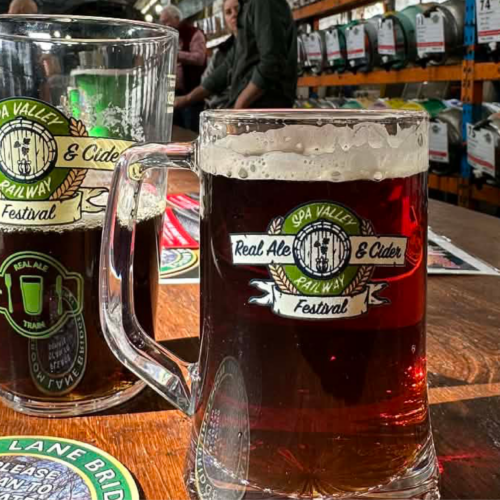
It was on Friday, 25th March 2011, that the first Spa Valley Railway passenger train arrived at Eridge from Tunbridge Wells West since Saturday, 6th July 1985. Hauled by RSH No. 62 'Ugly' with visiting GWR Small Prairie 5521 on the rear and whistles blowing, the train rounded the curve and arrived at Eridge platform 2. Bringing to a close the start of the Spa Valley's journey into becoming a highly established heritage railway. 2011 was a bumper year for the railway and was the start of our well-known Real Ale & Cider Festivals, 25 ales and three ciders... Compare that to the 2025 event, where we had 230 ales, 80 ciders and 14 craft beers! The event has grown since the early days!

A tame year for the Spa Valley Railway after the very busy year of reopening to Eridge. This year saw the visit of LMS 4F 44222, which became the first tender engine to operate on the line since the 1960s.

The return of our Diesel Gala after a short absence and the repaint of Class 37/0 37254. This was the first large Diesel Gala since reopening to Eridge. This was also the year our Sunday Lunch trains were launched.

The first stage of the Groombridge signalling scheme came into operation, and the visit of Class 26 26038 from Scotland also took place.

It was 30 years since the line closed, and we marked the occasion with a visit from Class 205 DEMU 1133 from the Lavender Line. This was the first time since the Thumper's were withdrawn from service in 2004 that a pair had been seen together in working order.

Further dining experiences were launched at the Spa Valley Railway to attract more visitors and raise our profile. This was the first time the railway had carried over 40,000 visitors in a season. A trend that was set to continue as the railway grew further.

The largest diesel to ever traverse our railway since the 1990s, Class 50 50026 'Indomitable', visited for the Summer. The railway continued to operate a successful number of dining experiences throughout the year and expanded its offerings into areas it had not previously served. Another busy year was had, including a successful Beer Festival.

A busy year for the railway saw the first visiting mainline steam engine for several years in the form of Lancashire & Yorkshire A Class 52322. The most powerful diesel locomotive in the shape of Class 55 55019 'Royal Highland Fusilier', aka a DELTIC, and the sole surviving Class 17 D8568, aka the Clayton, also visited.

The last year of normality for a while! The railway carried a significant number of volunteers and operated its last season of full-on Santa Specials. The visit of Great Eastern Railway Y14 564 from the North Norfolk Railway became the third 0-6-0 tender engine to traverse our metals. This would turn out to be the last year of operating the Santa Specials in their previous format.
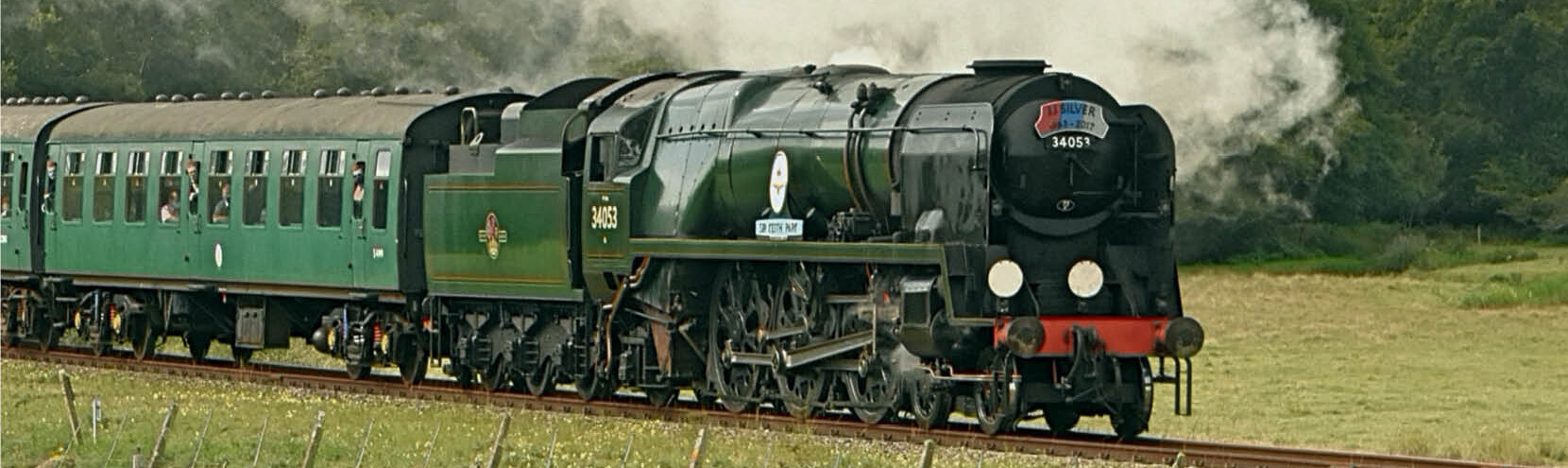
A year we all wish we could forget in some ways, but will be remembered greatly for others! We reopened for four weeks in February and March, until the dreaded lockdowns went into effect, which meant we couldn't reopen until August. The most significant change for us was the arrival of Bulleid Pacific 34053 'Sir Keith Park', which would become a resident at the Spa Valley Railway. RSH No. 62 'Ugly', which had held the steam front for many years, operated for the last time as its boiler ticket expired during the early 2021 lockdown. The railway closed on 20th December due to the tier 4 regulations at the time which prevented the Santa Specials from continuing.

A year of adapting to a post-lockdown way of working, restrictions were lifted in the Summer, and we relaunched all of our experiences. This was the first year THE POLAR EXPRESS™ Train Ride arrived at the Spa Valley Railway and also the first time Bulleid Pacific 34053 'Sir Keith Park' saw regular use. Despite only reopening in May 2021 we had a very busy year including a change to our festive season.

A special year for us, as we celebrated 25 years since the railway reopened. This saw the visit of 34092 'City of Wells' and BR Standard 4MT 76069 for the occasion; the latter was once a resident of 75F in the days of steam. The year also saw the Caledonian Railway locomotives 419 and 828 visiting for our Scottish event, which turned out to be (at the time) the busiest enthusiast event we'd ever staged. This would only be surpassed by the Cuckoo Line Gala three years later.

Another busy year for our railway, lots of visitors and the arrival of Bulleid Pacific 34072 '257 Squadron' from a period of operations. Galas took place, and the bond between the South Devon Diesel Traction group and Spa Valley was further cemented, with both Class 25s, D7612 and D7535, operating together throughout the Summer. A visit from the Isle of Wight Steam Railway of Ivatt Tank 41313 saw the engine return to the mainland for the first time since 2017, and the Bluebell Railway's O1 No. 65 made a trip across the Forest, its first time away from its Sheffield Park base since 2009.

A further expansion of our dining trains and other experiences saw one of the most successful years for the Spa Valley Railway, with over 95,000 people visiting and travelling on our trains. This year also saw the return of 34053 'Sir Keith Park' to the line following an overhaul. The engine was also renamed '303 Squadron' for a period. The visitors for the year included Class 50 50021 'Rodney' for the first time, Class 03 03063 'Paul A. Mobbs' from the Mid Norfolk Railway, and GWR Large Prairie 4144 from Didcot, the largest GWR locomotive to traverse the line.

The most up-to-date post and another busy year for the Spa Valley Railway as we took part in the nationwide Railway 200 celebrations. The commemoration of the Cuckoo Line's 60th anniversary since closure took place from 13th to 15th June and included the re-opening of Heathfield Tunnel for three days only. A highly successful event that brought together trains that once ran on the line, buses linking the operational Spa Valley with the disused line at Heathfield, plus a huge selection of educational posters, banners, and tours, was held as part of this fantastic one-in-a-lifetime event.
find out first about our special events